
Human-Centered Design for Space Habitability: Psychological, Circadian, Privacy, and Microgravity Considerations in Extreme Environments
Executive Summary
In September 2024, NASA's Human Exploration Research Analog (HERA) Campaign 4 demonstrated that dynamic lighting schedules reduced attentional lapses and improved circadian alignment during chronic sleep restriction—validating non-pharmacological countermeasures for a risk that drives 71-78% of astronauts to require sleep medications during ISS missions. This validates five years of research linking habitability engineering to mission-critical crew performance.
This white paper examines ISS operational data (2020-2025), Gateway/Artemis habitat developments, and analog studies across psychological distress, circadian disruption, privacy architectures, and microgravity sensorimotor adaptation. As Gateway HALO approaches 2025 deployment and commercial LEO platforms transition toward 2026-2030 operations, the convergence of validated countermeasures with persistent maturation gaps creates strategic positioning opportunities during the shift from government-operated research to commercial deep-space infrastructure.

Comprehensive analysis examining ISS operational data (2020-2025), Gateway HALO developments, and NASA analog studies (HERA, CHAPEA) across psychological health, circadian management, privacy architectures, and microgravity ergonomics. Documents validated outcomes including dynamic lighting countermeasures reducing sleep medication dependency and behavioral health interventions addressing 60%+ psychological disorder prevalence on extended missions. 52-page PDF with engineering specifications, analog mission data, and strategic frameworks for habitat designers and space infrastructure investors.
Research Context: The Habitability Challenge
Long-duration spaceflight imposes quantified constraints that conventional spacecraft engineering systematically underestimates. Severe psychological disorders affect over 60% of crews on missions exceeding 600 days. Circadian misalignment reduces sleep duration from 6.4 to 5.4 hours per episode during 19% of ISS sleep periods, driving heavy pharmacological dependency. Gateway HALO's 10 m³ habitable volume falls 75% short of recommended 32 m³/crew guidelines. Microgravity induces 76.6% reductions in cervical spine loading, requiring comprehensive ergonomic workstation reconfigurations that accommodate neutral body posture fundamentally incompatible with terrestrial furniture.
This white paper examined ISS missions spanning 2020-2025, NASA analog programs including HERA 45-day confinement studies and CHAPEA 378-day Mars simulations, Artemis Gateway developments (HALO, Lunar I-Hab), and commercial platform designs from Axiom Space, Sierra Space, and Blue Origin. The analysis synthesized 4,253 ISS sleep episodes, neurocognitive assessments from 25 astronauts during six-month missions, and operational data from Solid-State Lighting Assembly deployments addressing circadian disruption.
The space habitat market—projected from $6.5 billion in 2024 to $24 billion by 2033 at 16-20% CAGR—reflects growing demand for research platforms, manufacturing facilities, and sustained lunar operations. As ISS transitions toward 2030 retirement and Gateway enables cis-lunar operations beginning 2028, the 2026-2030 window presents strategic inflection points for habitability technology deployment across government and commercial infrastructure.
Validated Outcomes Across Four Critical Domains
Psychological Distress and Behavioral Health Interventions
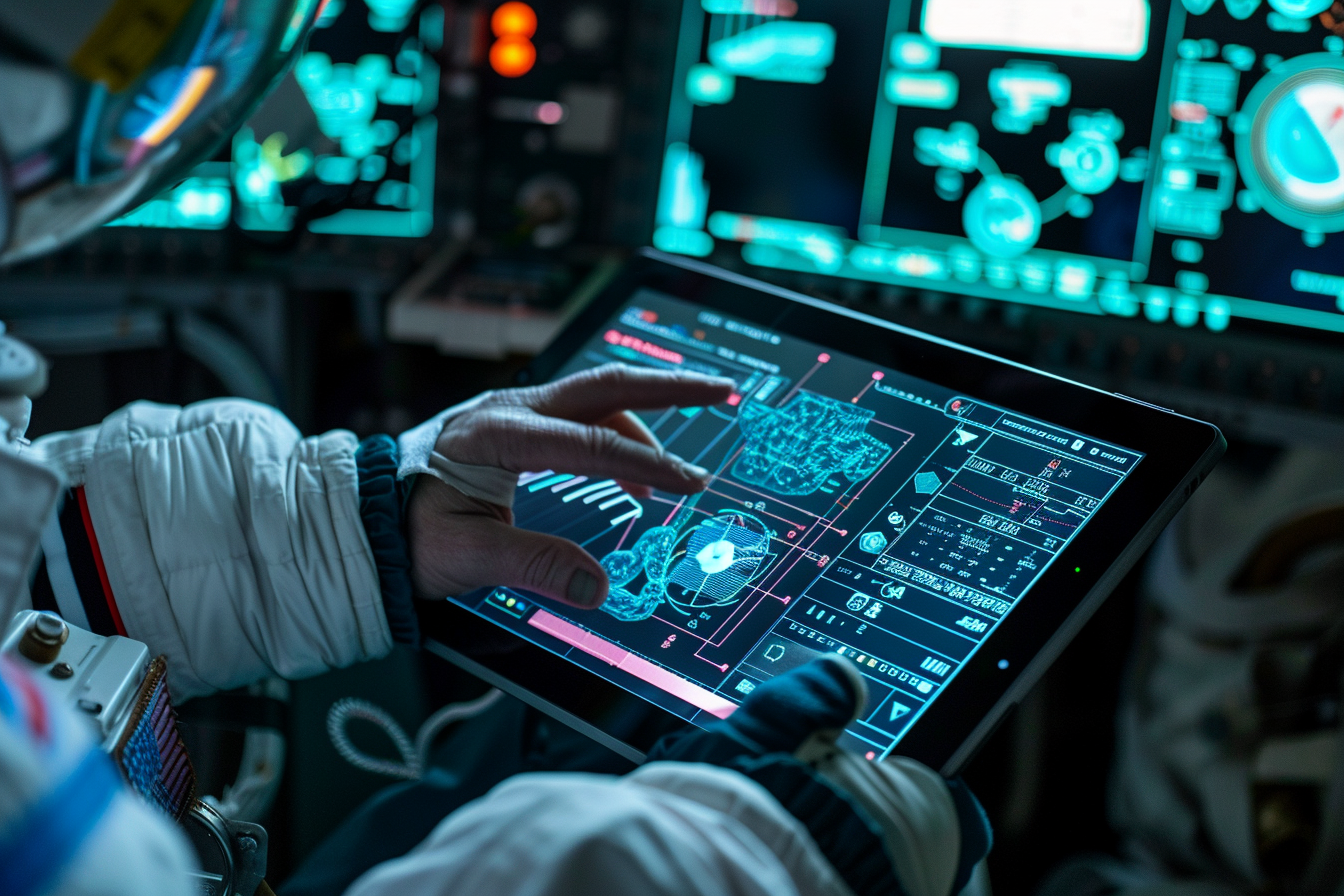
NASA documented that 22.8-85.2% of astronauts exhibited anxiety symptoms and 34.8-43.2% showed depressive symptoms during long-duration missions, with current ISS behavioral health symptom incidence at 0.62 per person-year—likely underestimated due to reporting reluctance. Mars-500 and HERA analog missions revealed that confinement-induced stress affects team cohesion dynamics, with all crews reporting at least one conflict by 40% mission completion or approximately 90 days. The Axiom-4 AstroMentalHealth project analyzed behavioral data, facial expressions, and cognitive performance to develop autonomous behavioral health platforms addressing deep-space communication delays (up to 22 minutes one-way for Mars missions) that preclude real-time Earth consultation. These findings suggest momentum toward AI-driven psychophysiological monitoring systems and automated psychotherapy platforms providing confidential support without crew-ground communication dependencies.
Circadian Rhythm Management via Dynamic Lighting Countermeasures
ISS operational data revealed that circadian misalignment occurred in 19% of sleep episodes, reducing sleep duration and correlating with doubled hypnotic medication use (24% versus 11% of aligned nights). The 2016 deployment of Solid-State Lighting Assemblies introduced spectrally tunable LEDs delivering melanopic-optimized blue-enriched light for alertness and red-depleted illumination for sleep facilitation—the first operational circadian countermeasure validated through analog studies. HERA Campaign 4 demonstrated that dynamic lighting schedules produced significantly fewer attentional lapses on Psychomotor Vigilance Tests, faster mean reaction times, and improved circadian phase alignment (melatonin rhythm peak occurring approximately 1.5 hours earlier) compared to static lighting controls despite identical sleep restriction. ESA astronaut Andreas Mogensen tested the SAGA Circadian Light Panel beginning August 2023, utilizing seven LED types to simulate continuously varying solar spectra throughout simulated days. These developments indicate momentum toward personalized chronotype profiling and adaptive environmental control systems addressing Mars' 24.65-hour sol cycle and individual genetic variation in circadian photosensitivity.
Privacy Architectures in Confined Habitats
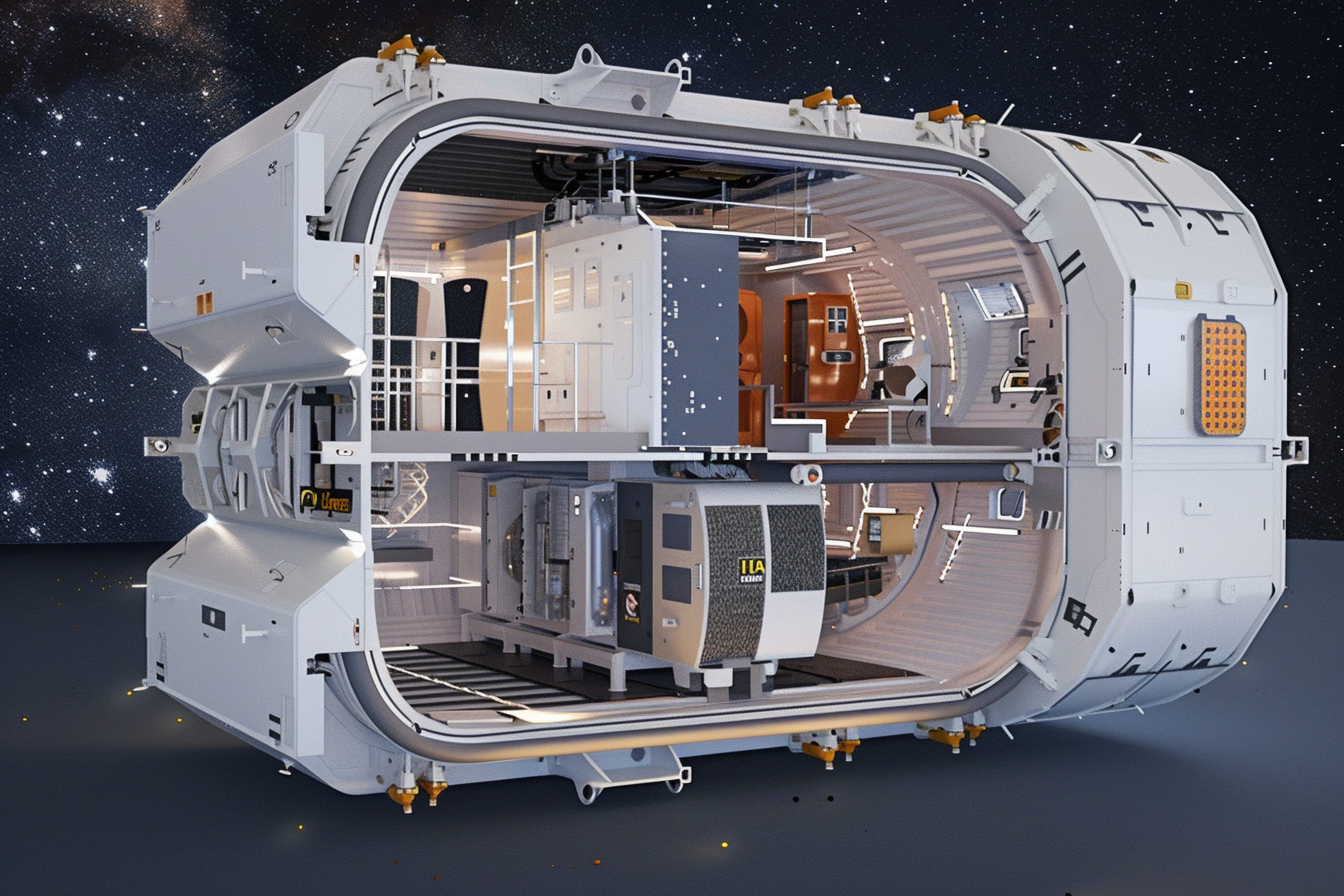
Gateway HALO's compact 10 m³ habitable volume for four crew during 30-day missions represents a regression from ISS Harmony's crew quarters—2.5-3.5 m³ lockable compartments with acoustic attenuation, adjustable lighting, and environmental controls. The absence of dedicated individual quarters in HALO, reliance on shared sleep stations, and deployment of privacy partitions only in the larger Lunar I-Hab (48 m³) occurs precisely as mission durations extend and isolation stress intensifies. Sierra Space's Large Inflatable Fabric Environment demonstrates alternative approaches: three-story, 27-foot-diameter expandable structures achieving increased habitable volume-to-launch-mass ratios, with self-deployable interior partitions and reconfigurable quadrants supporting personalized crew quarters. Research on Antarctic overwintering crews and Mars analogs highlights that territorial dynamics—manifesting through irritability, interpersonal conflict, and stress responses—require privacy zones functioning as essential countermeasures against territorial encroachment and social fatigue. These findings suggest opportunities for modular privacy architectures incorporating acoustic attenuation systems (STC ≥45 partitions rendering speech inaudible), decentralized environmental controls (individualized thermal and lighting zones), and semiformal transition spaces supporting dynamic crew interaction patterns.
Microgravity Impacts on Spatial Orientation and Ergonomic Adaptations
Long-duration ISS missions induce structural brain changes including upward displacement, gray matter volume increases in sensorimotor cortex regions, and white matter disruptions in visuospatial processing areas. Astronauts experience visual reorientation illusions persisting for months, wherein spacecraft surfaces appear to spontaneously exchange identity as crews change body orientation—phenomena driven by absent gravitational cues and conflicts between multiple perceptual reference frames. Biomechanical modeling reveals 76.6% reductions in cervical spine compressive forces under neutral body posture in microgravity, paradoxically increasing disc herniation risks while necessitating workstation designs accommodating flexed trunk, hip, and shoulder configurations. KC-135 parabolic flight evaluations demonstrated that flexible arm hole glove ports reduce extreme discomfort compared to rigid iris-designed ports, and foot restraints with integrated knee support significantly decrease muscle fatigue during extended operations. Post-flight sensorimotor impairments—including balance declines, bimanual coordination deficits, and slower processing speeds—require 6-30 days recovery, presenting acute operational challenges for Mars missions where crews must perform complex surface operations immediately after 6-9 month transits. Russian spacecraft design principles incorporating longitudinal floors, rectangular cross-sections, and color-coded surfaces (brown floors, tan walls, lighter tan or blue ceilings) demonstrate architectural approaches reinforcing locally consistent visual vertical references that mitigate illusion frequency.
Methodology and Research Scope
This white paper synthesizes ISS operational data spanning 2020-2025, including analyses of 4,253 sleep episodes revealing circadian alignment patterns and pharmacological sleep aid dependency rates. Research evaluated neurocognitive assessments using NASA's Cognition Battery across 25 professional astronauts during six-month missions, examining processing speed, visual working memory, sustained attention, and risk-taking propensity across flight phases. NASA analog studies—HERA Campaign 4 imposing chronic sleep restriction protocols across 45 days, CHAPEA 378-day Mars simulations, Mars-500 520-day isolation studies—provided controlled environments for testing behavioral health interventions, circadian countermeasure efficacy, and team cohesion dynamics.
The analysis incorporated Artemis Gateway technical specifications documenting HALO's 10 m³ habitable volume and Lunar I-Hab's 48 m³ deployable configurations, commercial platform developments including Axiom Station's modular segments (attachment scheduled 2026), Sierra Space LIFE expandable habitats, and Blue Origin/Sierra Space Orbital Reef's 830 m³ pressurized volume designs. Peer-reviewed literature examining melanopic photoreception mechanisms, vestibular dysfunction during microgravity exposure, neutral body posture biomechanics, and spatial cognition alterations informed the multidisciplinary assessment.
A framework integrating psychological well-being, circadian alignment, privacy thresholds, and ergonomic requirements across mission phases maps interactions between environmental control systems, crew performance outcomes, and behavioral health indicators. The analysis identifies Technology Readiness Level constraints in personalized environmental control (TRL 5-6), multisensory variety systems including biophilic modules and olfactory stimulation (TRL 3-5), and integrated behavioral health monitoring platforms combining AI-driven psychophysiological assessment with adaptive environmental responses.

Critical Maturation Gaps and Innovation Opportunities
Despite validated ISS countermeasures and Gateway development progress, critical maturation gaps persist in three interconnected domains that determine deep-space habitability viability:
Scalable Personalization of Environmental Control Systems
Current ISS environmental control and life support systems prioritize crew-wide standardization over individual customization, creating mismatches between habitat conditions and astronaut-specific requirements for circadian entrainment, thermal comfort, and sensory stimulation thresholds. While Solid-State Lighting Assemblies offer three programmable settings, they operate as centralized pre-programmed protocols rather than real-time adaptive platforms responding to individual biomarkers or crew preferences. Analog studies demonstrate significant inter-individual variability in chronotype (genetic polymorphisms in PER2, PER3, CLOCK genes), thermal sensitivity, and psychological resilience, yet habitat architectures provide uniform air distribution, temperature regulation, and humidity control to maximize mass and power efficiency. Decentralized systems offering crew-member-specific environmental zones incur substantial penalties: increased complexity, redundancy requirements, interconnecting ducting mass, and maintenance workload. No current spaceflight system incorporates genetic screening, continuous circadian phase monitoring via wearable sensors, or adaptive feedback loops optimizing light delivery in real time—representing clear opportunities for private-sector innovation in sensor integration, machine learning algorithms, and closed-loop control architectures.
Insufficient Multisensory Variety to Counter Environmental Monotony
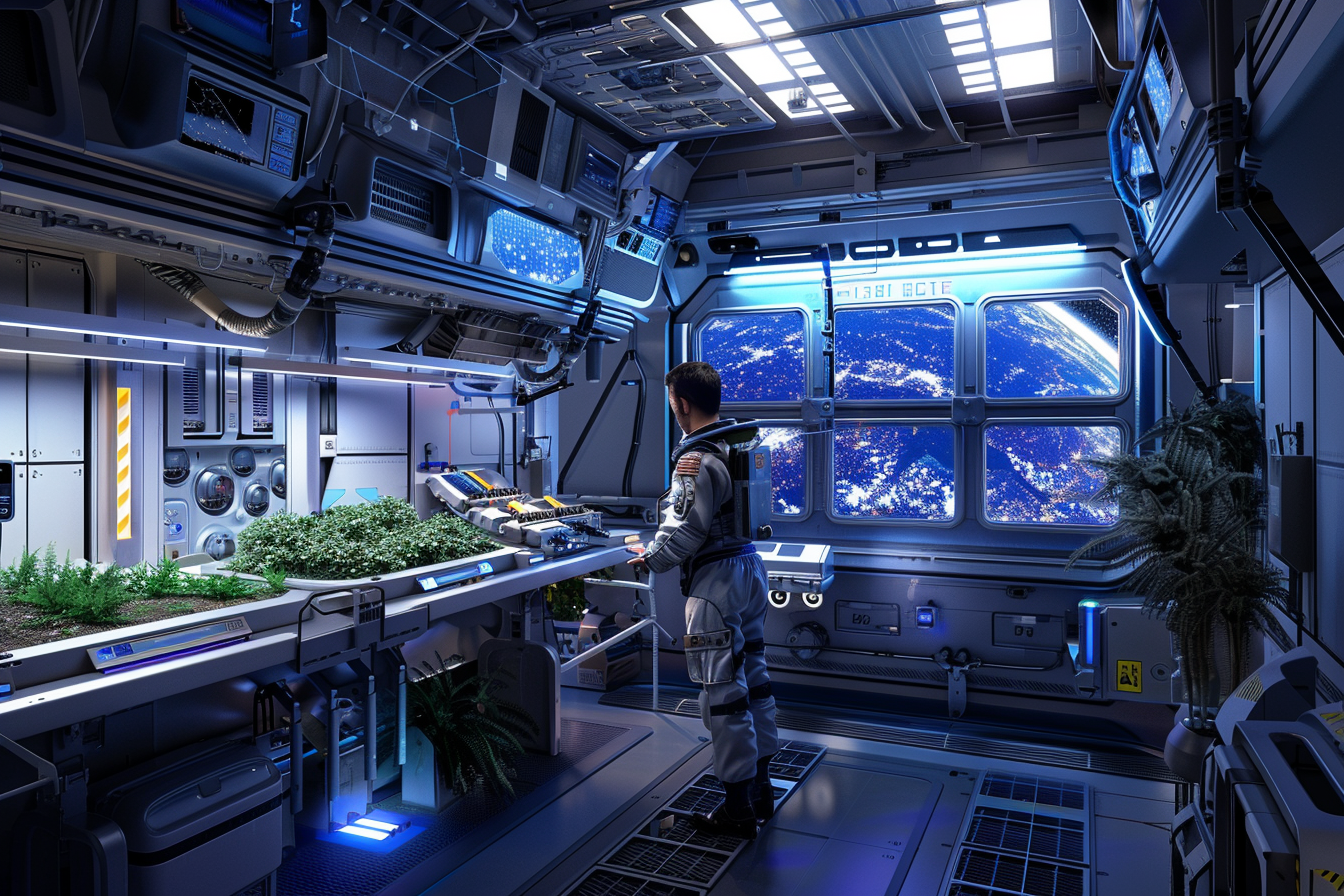
Sensory monotony—prolonged absence of stimulation across visual, auditory, olfactory, kinesthetic, tactile, gustatory, and temporal modalities—represents a well-documented risk factor for neural plasticity decline, performance decrements, and psychological distress during missions extending beyond 18 months. ISS operations demonstrate preliminary efficacy for select interventions: VR headsets paired with exercise equipment significantly increase motivation by simulating Earth terrain routes, and haptic force-feedback interfaces improve remote manipulation precision. However, these applications remain narrowly scoped rather than constituting integrated habitat-wide sensory enrichment systems. Biophilic design principles—integrating plants, natural materials, organic forms, Earth-tone color palettes—demonstrate stress reduction and cognitive performance improvements in terrestrial applications, yet translation to microgravity confronts formidable challenges. Greenhouse systems providing visual, olfactory, kinesthetic, and tactile stimulation require closed-loop nutrient delivery, photosynthetic lighting (200-400 μmol/m²/s), atmospheric CO₂ enrichment, and root-zone stabilization incompatible with free-floating fluids in zero-gravity. Olfactory stimulation platforms must satisfy stringent volatile organic compound limits (<0.5 mg/m³) precluding conventional fragrance compounds. Quantitative metrics for assessing habitat sensory complexity—validated correlations between environmental diversity and crew neuroplasticity biomarkers—remain underdeveloped, limiting evidence-based design requirements.
Gaps in Integrated Behavioral Health Monitoring and Adaptive Response Systems
Current ISS operations employ periodic psychological assessments and video monitoring, lacking real-time automated detection and intervention capabilities necessary for managing acute crises, gradual team cohesion decline, and subclinical deterioration during communication delays that preclude timely Earth-based consultation. Emerging concepts propose AI-driven systems utilizing Natural Language Processing for communication analysis, biometric sensors (heart rate variability, cortisol levels, sleep architecture) for physiological stress detection, and environmental sensors tracking social interaction patterns. These platforms would generate individual health reports flagging depression, anxiety, and stress indicators while triggering adaptive environmental responses: automatically adjusting lighting spectra to counter circadian misalignment, modifying acoustic environments during high-stress periods, activating virtual reality nature experiences for psychological restoration. However, significant barriers impede implementation: validated psychophysiological models linking environmental parameters to individual stress responses remain immature (TRL 3-4), ethical frameworks governing data privacy and crew autonomy over environmental conditions are unresolved, and integration with decentralized environmental control architectures demands control algorithms preventing hazardous state transitions while respecting crew preferences.
Strategic Decision Support for 2026-2030 Transition Period
The analysis supports evaluation of habitability technology investments during the critical 2026-2030 period spanning ISS retirement planning, Gateway operational deployment, and commercial LEO platform maturation. Understanding the convergence of validated ISS countermeasures—dynamic circadian lighting reducing pharmacological dependency by enabling melanopic-optimized spectral tuning, modular privacy architectures supporting crew autonomy through acoustic isolation and lockable compartments, ergonomic neutral body posture workstations reducing muscle fatigue—with persistent maturation gaps in scalable personalization, multisensory environmental complexity, and integrated behavioral health monitoring could inform positioning decisions as deep-space infrastructure shifts from government research to commercial operations.
Organizations establishing capabilities in adaptive environmental control systems (wearable biomarker sensors, machine learning chronotype profiling, real-time spectral tuning achieving TRL 8-9), biophilic habitat modules (microgravity-compatible plant cultivation, crew-accessible interaction interfaces, measurable psychological restoration outcomes), and AI-driven behavioral health platforms (privacy-preserving data architectures, validated psychophysiological models, adaptive environmental response protocols) during early commercial platform development phases may achieve advantageous positioning when sustained lunar operations and Mars transit architectures mature.
The evidence base indicates potential inflection points: HERA Campaign 4 demonstrated trends toward improved circadian alignment under dynamic lighting despite chronic sleep restriction, Axiom Space raised $700 million in venture capital supporting commercial station development with ISS attachment scheduled 2026, Sierra Space achieved successful burst testing of LIFE expandable habitat structures, and the space habitat market exhibits 16-20% CAGR growth toward $24 billion by 2033. The convergence of severe volume constraints (Gateway HALO 75% below recommended standards), documented behavioral health risks (>60% severe disorder prevalence on 600+ day missions), validated countermeasure efficacy (circadian lighting, autonomous behavioral health platforms), and emerging commercial demand suggests momentum toward private-sector innovation addressing both government Artemis requirements and commercial differentiation strategies for research platforms, manufacturing facilities, and space tourism operations.
Research Scope and Source Foundation
Research synthesis covered 2020-2025, examining 4,253 ISS sleep episodes, 25 astronaut neurocognitive assessments during six-month missions, HERA Campaign 4 45-day confinement studies, CHAPEA 378-day Mars simulations, and Gateway HALO/Lunar I-Hab technical specifications. Analysis incorporated commercial platform developments from Axiom Space, Sierra Space, Blue Origin, and peer-reviewed literature on psychological distress prevalence, circadian countermeasure efficacy, privacy architecture constraints, and microgravity sensorimotor adaptation across government and private-sector deep-space habitat programs.
Sources included ISS operational data and NASA Cognition Battery neurocognitive assessments; NASA analog mission protocols (HERA, CHAPEA, Mars-500) and behavioral health outcome metrics; Artemis Gateway technical documentation and commercial platform specifications; peer-reviewed publications on circadian photoreception, vestibular adaptation, and spatial orientation; and market analyses, venture capital deployment data, and public-private partnership frameworks.
By establishing rigorous technical baselines, quantifying maturation gaps in scalable personalization (TRL 5-6 adaptive environmental control), multisensory variety (TRL 3-5 biophilic modules), and integrated behavioral health monitoring, and delineating private-sector business opportunities within a market projected to reach $24 billion by 2033, this analysis provides the foundational framework necessary to guide subsequent economic analyses and investment strategies for sustainable deep-space habitation during the Artemis era and commercial LEO platform transition."