
Space Architecture: Evolving Design for Extraterrestrial Living
Space architecture is a rapidly evolving field, intersecting disciplines such as traditional architecture, aerospace engineering, and materials science to create sustainable habitats for human life on celestial bodies.
Advancements have been driven by AI, 3D printing, and resource-utilizing technologies. Emerging trends focus on addressing environmental challenges and enhancing psychological well-being in space.
This article will explore the past, present, and future of space architecture, highlighting technological innovations and design philosophies driving human-centered, sustainable designs for living beyond Earth.
Historical Development and Background
The origins of space habitat design trace back over a century, rooted deeply in visionary concepts that combined imagination with emerging scientific understanding. The evolution of this field marks a journey from speculative fiction and theoretical frameworks to tangible engineering efforts that have enabled human presence in orbit and envision future long-term extraterrestrial settlements.
The conceptual foundations began as early as the late 19th century, with Edward Everett Hale's 1869 fictional work "The Brick Moon," considered the first narrative presenting space settlements. In the early 20th century, Konstantin Tsiolkovsky, a Russian aerospace pioneer, mathematically calculated Earth's orbital velocity and speculated on rotating cylindrical space habitats, framing practical visions of space stations. These ideas were further developed by thinkers like John Desmond Bernal and Dandridge M. Cole, who explored large space settlements and the possibilities of asteroid colonization in the mid-20th century.
The 1970s marked a pivotal period with Princeton physicist Gerard K. O'Neill's groundbreaking work. His seminal 1974 paper, "The Colonization of Space," published in Physics Today, argued that engineering feasible, self-sustaining space colonies could address many terrestrial challenges. O'Neill led the influential 1975 NASA/Stanford Summer Study, which rigorously analyzed habitat designs such as the Bernal Sphere, Stanford Torus, and cylindrical colonies with millions of inhabitants. These concepts addressed critical engineering problems, including radiation shielding, artificial gravity, naturalistic lighting, and sustainable closed-loop life support systems.
Parallel to these theoretical advances, tangible space habitats began to emerge in Earth orbit with the launch of the Soviet Union’s Salyut 1 in 1971, marking the first permanent human presence in space. NASA’s Skylab followed in 1973, showcasing extended human work in microgravity environments, primarily for laboratory research. The Soviet Salyut series and later Mir space station significantly improved operational capabilities, allowing longer missions and broader international cooperation. These early habitats provided invaluable data on human physiology, psychology, and the technical requirements for sustaining life beyond Earth’s atmosphere.
The interdisciplinary nature of space habitat design also crystallized through these milestones, necessitating collaboration between architects, aerospace engineers, biologists, and material scientists. Architectural principles had to merge with aerospace constraints to ensure structural integrity in extreme environments. Material science innovations were crucial in developing protective shielding, and closed-loop environmental systems were essential to support human life sustainably. Additionally, considerations of human psychological and physiological wellbeing became paramount, influencing habitat layout, lighting, and communal spaces to mitigate isolation and the adverse effects of long-duration spaceflight.
This historical trajectory set a robust foundation for modern space architecture, where visionary theory continues to converge with advancing technology to realize the dream of off-world human habitation, including planned lunar and Martian habitats.
Core Concepts and Principles of Space Architecture
Space architecture is a unique discipline that extends architectural theory and practice into the extraterrestrial realm, where designers must rigorously respond to environmental extremes and human factors unlike those encountered on Earth. It is not simply a transfer of terrestrial building traditions but a specialized field demanding innovative concepts guided by the profound challenges of space habitation.
One of the foundational principles of space architecture is addressing the hostile environmental conditions beyond Earth’s atmosphere. Habitats must maintain pressure integrity against the vacuum, endure extreme temperature fluctuations, and withstand threats such as micrometeoroid impacts and space debris. Another critical concern is shielding inhabitants from the pervasive and potentially harmful effects of cosmic and solar radiation.
Space architects must also grapple with designing for microgravity conditions, where traditional spatial orientations lose their usual meanings. This demands creative solutions for efficient movement and novel spatial arrangements for furniture and equipment to accommodate the altered dynamics of weightlessness.
Central to all space architectural designs is the integration of closed-loop life support systems, recycling air, water, and waste to sustain human life in isolated habitats. The design must ensure vital conditions such as breathable air, proper thermal regulation, and potable water, maintaining operational safety and redundancy.
The structural integrity of space habitats is another cornerstone principle. Construction materials must balance mass efficiency with strength. Advanced material sciences focus on durability, safety, and adaptability, exploring the use of in-situ resources for sustainable habitation on the Moon or Mars.
Beyond physical survival, space architecture places strong emphasis on the human psychological and physiological needs in extreme environments. Habitats must foster mental health by creating open, inviting spaces that offer visual variety and a sense of privacy despite spatial constraints.
Moreover, space architecture adopts a human-centered approach emphasizing adaptability and flexibility to respond to evolving mission requirements. Circulation and spatial organization must facilitate efficient movement and interaction, maintaining inclusivity and accessibility for diverse inhabitants.
In essence, core space architecture principles ensure not only the physical survivability of off-world habitats but also the health, comfort, and productivity of their human occupants.
[Source: Illustrarch, Space Architect.org, How To Rhino]
Technologies Shaping Space Architecture in 2025
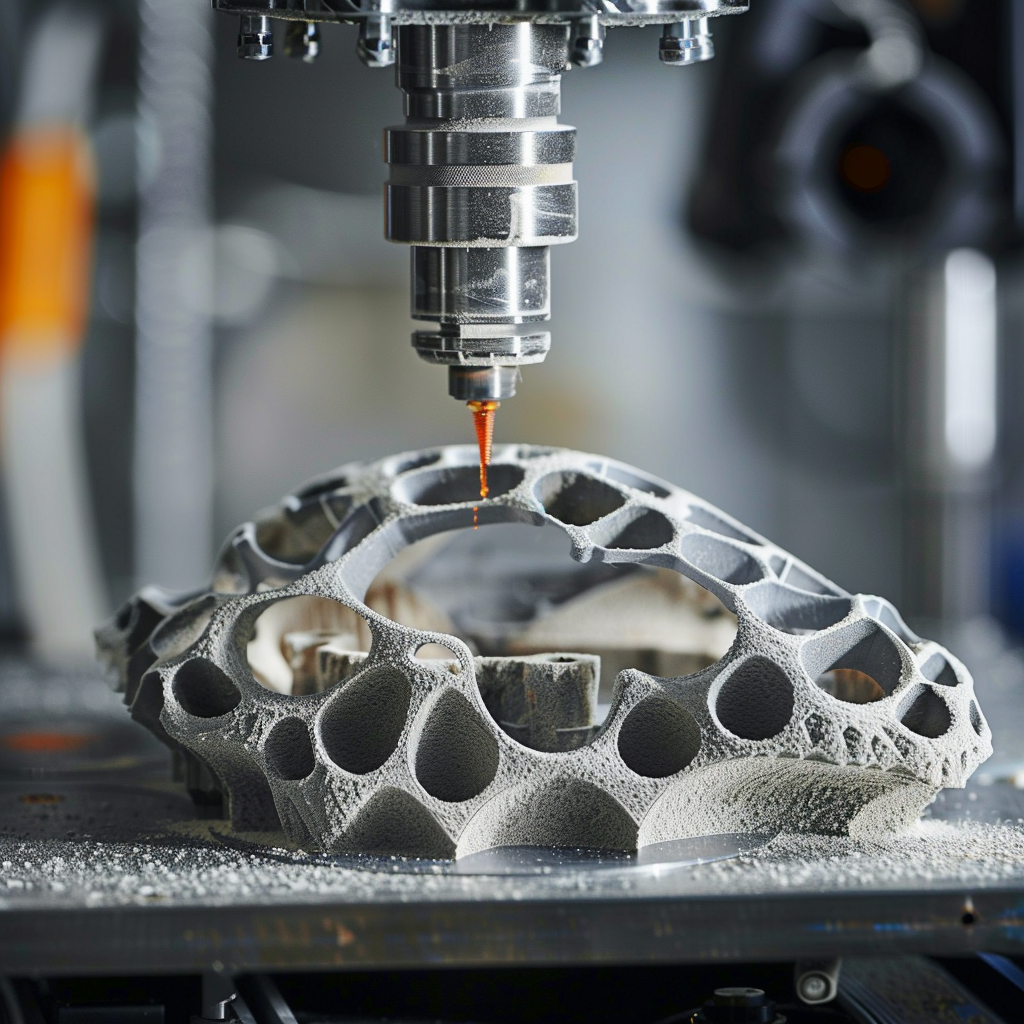
Advancements in technology are profoundly transforming the landscape of space architecture in 2025, addressing critical structural and operational challenges to enable sustainable extraterrestrial habitats. Influential innovations include AI-driven design tools, 3D printing technologies, In-Situ Resource Utilization (ISRU), digital twin frameworks, and modular construction methods.
AI-driven design has become foundational within space architecture, offering generative design capabilities that rapidly produce structural layouts. Research from Carnegie Mellon University illustrates how AI enhances spatial intelligence in zero-gravity contexts. Google's space-based AI infrastructure supports real-time computational capability for autonomous missions.
Complementing AI design, 3D printing technologies have matured for space habitat construction. NASA’s CHAPEA missions showcase 3D-printed habitats like the Mars Dune Alpha, using regolith-based construction methods. Collaborations focus on autonomous 3D printing systems capable of constructing robust structures with advanced materials.
ISRU technologies leverage local resources for construction, reducing launch mass and costs. This includes regolith shielding for radiation protection and biotechnologies like bacterial biocementation. Programs such as NASA’s Artemis advance ISRU development to enhance sustainability.
Digital twin technology revolutionizes habitat operation and management. AI-enabled digital twins provide real-time simulation of habitat systems. Projects like Carnegie Mellon University’s HOME initiative integrate life support systems for optimized performance and safety.
Modular construction methods enable scalable habitats through standardized modules. Current efforts focus on integrating prefabricated and in-situ assembled segments, reducing launch mass and enhancing resilience. Modular paradigms facilitate testing, establishing essential building blocks for future lunar and Martian settlements.
These technologies address challenges such as minimizing launch mass, ensuring radiation protection, and maximizing habitat flexibility and comfort. By 2025, they evolve space architecture from experimental concepts to deployable systems that sustain humanity’s presence beyond Earth.
[Source: Qbiq.ai, ASCE, IJFMR, Darling Ltd, BIOS Homes]
Major Challenges and Emerging Solutions
Space architecture contends with a unique set of structural and environmental challenges that demand innovative solutions. Low-gravity environments force a reconsideration of traditional architectural principles, emphasizing internal pressurization, temperature fluctuations, and micrometeoroid impacts.
One major structural challenge is managing internal atmospheric pressure, complicated by thermo-elastic stresses and micrometeoroid impacts. Radiation exposure, particularly on Mars, requires robust shielding solutions, such as regolith enclosures.
Reduced gravity alters structural design paradigms, making conventional Earth-bound forms less relevant. Tetrahedral structures and spherical nodes offer efficiency in low gravity, supporting modular habitat designs.
Resource scarcity is another constraint, with high lunar surface delivery costs prompting ISRU strategies. Utilizing regolith and innovative composites like biopolymer-basalt offers performance and sustainability benefits.
Modularity enables efficient assembly and adaptability in habitats. Techniques such as sphere packing optimize spatial arrangements, allowing habitats to be flexible and scalable according to mission needs.
The interdisciplinary approach in addressing these challenges combines expertise from architecture, materials science, engineering, and environmental science to create resilient habitats fostering human-centered living.
[Source: Structure Magazine, ArchDaily, Space Architect Resource, Cindrebay Blog, Bluebeam Blog, Evans Engineering]
Real-World Applications and Case Studies
Real-world projects like SAGA Space Architects' FLEXHab and NASA's Moon to Mars Architecture Program showcase the evolving landscape of space architecture towards truly human-centered habitats emphasizing functionality and well-being.
SAGA Space Architects' FLEXHab, created for the European Space Agency, serves as a lunar training habitat with a focus on human well-being, incorporating adaptable living spaces, sustainable materials, and environmental control systems. It facilitates astronaut training for NASA's Artemis program, emphasizing psychological comfort through elements like a simulated lunar cupola and daylight simulation.[Source: Designboom]
NASA’s Moon to Mars Architecture Program adopts a systems engineering approach to build sustainable lunar habitats as precursors for Mars missions. Initiatives like the M2M X-Hab Academic Challenge foster habitat subsystem development, reinforcing collaborations like FLEXHab’s role in the Moon to Mars strategy.[Source: NASA]
The integration of advanced environmental control systems, modular designs, and sustainable materials in projects like FLEXHab highlight the shift from survival to human-centered habitats, addressing psychological well-being, social dynamics, and everyday functionality in space.[Source: Parametric Architecture]
Human-Centered Design in Space Architecture
Human-centered design in space habitats shifts from traditional engineering-focused structures to environments emphasizing psychological and physiological well-being crucial for long-duration missions.
Integrating advanced circadian lighting systems helps maintain astronauts' natural sleep-wake rhythms, crucial in disrupting environments. SAGA Space Architects emphasize this in their habitats, acknowledging lighting as a pivotal factor for mental and physical health.[Source: NASA Technical Reports]
Creating spatial familiarity with elements like Earth-similar materials and green spaces helps mitigate alienation, fostering emotional stability essential for mental health. Designs incorporate sound-isolating sleeping pods, privacy setups, and differentiated work-personal spaces.[Source: Texas A&M University]
Early application of habitability tools extends to constructs like the Deep Space Gateway, aligning functionality with life balance as missions grow longer. Terrestrial comforts become integral to habitat design, supporting well-being and operational efficiency.[Source: SAGA Space Architects]
Sustainability and Future-Proofing Space Habitats
Sustainability in space habitat design leverages strategies ensuring self-sufficiency and resource efficiency crucial for long-duration missions in isolated environments.
Net-zero energy systems, rarely relying on cutting-edge solar technologies paired with robust storage solutions, enable continuous operation on celestial bodies.[Source: Mars Planet]
Closed-loop systems recycle waste and integrate bioregenerative life-support systems, enhancing resilience and self-reliance by mimicking Earth's ecosystem processes.[Source: Wiley]
Modular and flexible architectural designs support incremental evolution aligned with missions. Combining prefabrication and in-situ resource-derived elements fosters adaptability and responsiveness to extraterrestrial challenges.[Source: Mars Planet]
In situ resource utilization allows local materials to substitute for Earth-supplied components, enhancing habitat longevity and reducing environmental burden.[Source: Wiley]
Satellite communication networks support real-time monitoring, optimizing resource distribution and enhancing habitat operations' resilience and reliability under variable conditions.[Source: Mars Planet]
Future Perspectives
The future of space architecture leverages cutting-edge technologies like AI, materials science, and autonomous methods to redefine extraterrestrial habitat design, particularly for lunar and Martian colonization.
AI tools optimize habitat design and systems integration, while digital twins ensure real-time monitoring, strengthening resilience.[Source: Lockheed Martin]
Materials science enables resilient, sustainable building materials suited for hostile environments, focusing on low-carbon options and in-situ resources like 3D-printed regolith.[Source: Uncommon Arch]
Autonomous construction ensures minimal human intervention for pre-crew habitat preparation, supporting flexible mission designs and scalability.[Source: Lockheed Martin]
Multidisciplinary research must converge AI with materials and construction innovations to ensure operational safety and advancement in extraterrestrial habitats.[Source: Vectorworks]
The vision for space architecture emphasizes sustaining human presence through advanced technologies, fostering social cohesion and planetary stewardship.[Source: Cosentino]
Conclusions
Space architecture has transitioned from survival-centric beginnings to human-centered philosophies driven by AI, 3D printing, and ISRU. By 2025, these innovations redefine our approach to living beyond Earth. Real-world applications from SAGA Space Architects and NASA's Moon to Mars program exemplify this transformation.
The evolution of space architectures steers us toward sustainable and psychologically enriching extraterrestrial habitats, representing a significant milestone in human space presence.
Sources
ASCE - A 3D-Printed Habitat Is Home for Yearlong Missions to Mars
Darling Ltd - Living Blueprints: Why 2025 Is the Breakout Year for Digital Twins
Bluebeam Blog - Floating Architecture and Urban Space Solutions
NASA - Moon to Mars Architecture and ‘Architecting from the Right’
Mars Planet - Sustainable Space Architecture: Designing a Greener Future Beyond Earth
NASA Technical Reports - Habitability and Human Factors in Space Habitats
SAGA Space Architects - Space Habitats Are Getting a Makeover
Qbiq.ai - How AI in Architecture Design Is Reshaping the Industry in 2025
Uncommon Arch - The Future is Green: Top Sustainable Architecture Trends for 2025
Darling Ltd - Living Blueprints: Why 2025 Is the Breakout Year for Digital Twins
Texas A&M University - Building a Habitat for Sustainable Life in Space
Cosentino - 2025-2026 Global Trend Report: Shaping Tomorrow’s Future Design & Architecture