
Introduction to Space Investments
Capitalizing on The Orbital Industrial Revolution, the Next Frontier of Infrastructure

Space has graduated from the realm of science fiction and government prestige to become a distinct, investable asset class. We are witnessing the dawn of a new industrial revolution—extending from Low Earth Orbit (LEO) to the Lunar surface.
While headlines focus on billionaire personalities and launch spectacles, the real story is the silent, rapid development of a trillion-dollar economy. Reusable launch systems have collapsed the cost of access, transforming space from a barrier into a business environment.
Our Role: Signal in the Noise
The sector is complex, noisy, and opaque. Space Investments exists to bridge the gap between aerospace engineering and capital allocation. We strip away the jargon and the hype to provide clear, high-fidelity analysis of the space economy. Our mandate is simple: identify where capital is flowing, validate the underlying technologies, and map the economic implications for sophisticated investors.
The Investment Thesis: The Solar Silk Road
We view the future of space through the lens of historical infrastructure: a modern Silk Road.
Just as maritime trade routes defined the global economy for centuries, orbital trajectories are becoming the new shipping lanes. The value proposition is not merely exploration, but extraction, manufacturing, and logistics. From rare earth elements in the asteroid belt to Helium-3 energy resources on the Moon, the solar system represents a resource base that technology is finally unlocking.
The Phased Evolution
This infrastructure will not be built overnight. The space economy is unfolding in distinct, investable phases. Much like the early days of Atlantic trade, the environment is harsh and the risk is non-zero, but the trajectory is clear.
We view this development as a Technological Dependency Chain:
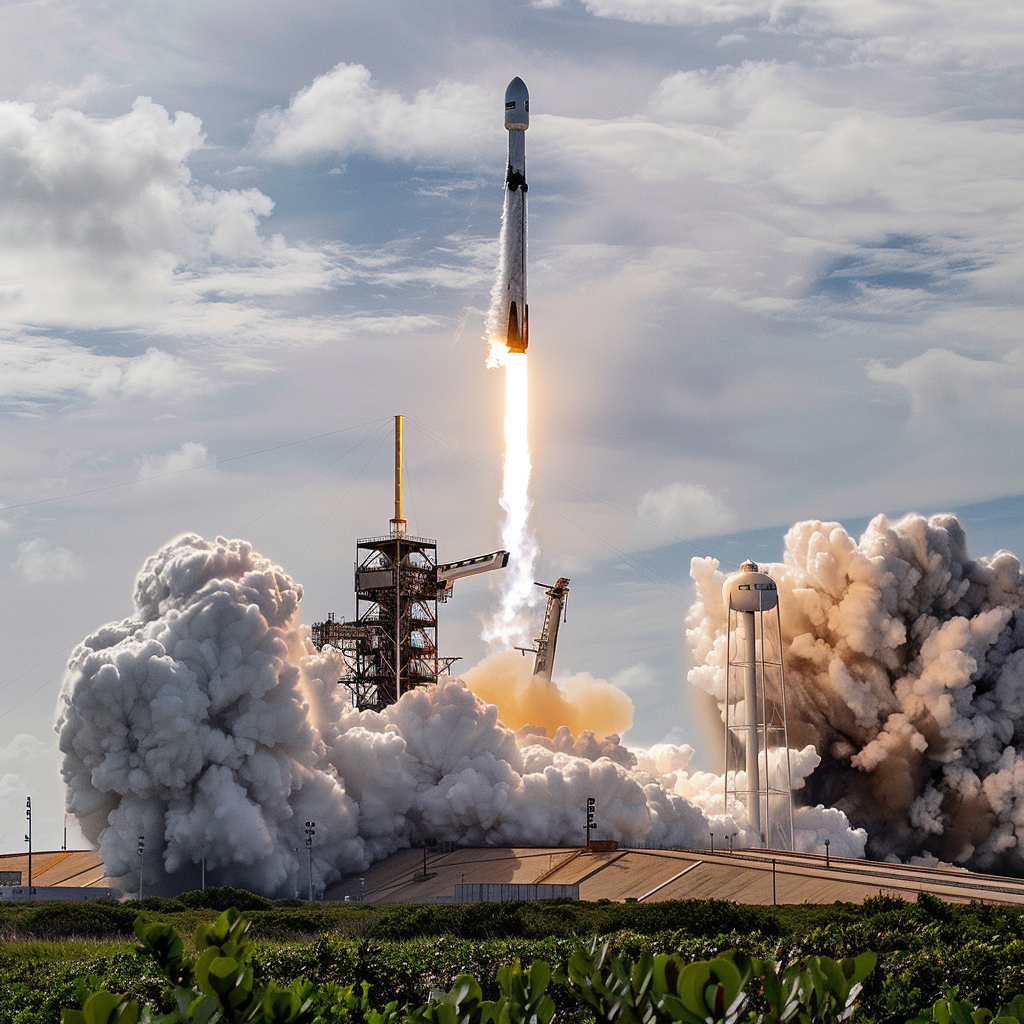
Access: Reusable launch systems lower the barrier to entry.
Infrastructure: Lower costs enable orbital stations and refueling depots.
Utilization: Infrastructure enables in-orbit manufacturing and resource extraction.
Crucially, this value flows both ways. The innovations required to survive in space—autonomous robotics, closed-loop life support, and extreme-efficiency energy systems—are immediately applicable to industries on Earth, from logistics to agriculture. Space is not just a destination; it is a technology multiplier.
Our Approach: Mapping the Value Chain
At Space Investments, we utilize a dual-layer thesis: tracking short-term commercial utility against long-term frontier expansion.
The sector requires a systematic approach. We track the macro-indicators—patent filings, government contract awards, and venture capital flows—to identify the tipping points. We look for the technologies that are solving immediate problems today while laying the groundwork for the off-world economy of tomorrow.
The Window of Opportunity
We are in the early stages of this capital cycle, but the "Land Rush" has effectively begun. The infrastructure is being engineered, the regulatory frameworks are being drafted, and the foundational contracts are being awarded.
We are here to chart that path—defining who builds the roads, who owns the resources, and where the smart capital is positioning itself for the long term.