
The Orbital Cloud: SpaceX and Data Centers in Space

Executive Summary: The "Energy Wall" & The Off-Planet Solution
The growth of Artificial Intelligence is no longer constrained by code, but by physics. On Earth, the AI sector has hit a "Capacity Wall":
Power: Grid interconnection queues for new Gigawatt-scale data centers now exceed 5 years in major hubs (Virginia, Ireland).
Heat: Environmental regulations (EU EED) are capping the water usage required to cool high-density GPU clusters.
Our thesis is that the solution to terrestrial scarcity is Orbital Sovereign Compute. The immediate leader in this space is not a traditional cloud provider (AWS/Azure), but the vertically integrated SpaceX / xAI nexus. By launching "Orbital Data Centers" via Starship, they are building a computational supply chain that bypasses the terrestrial power grid entirely.
1. The Asset: Starlink V3 as "The Flying Data Center"
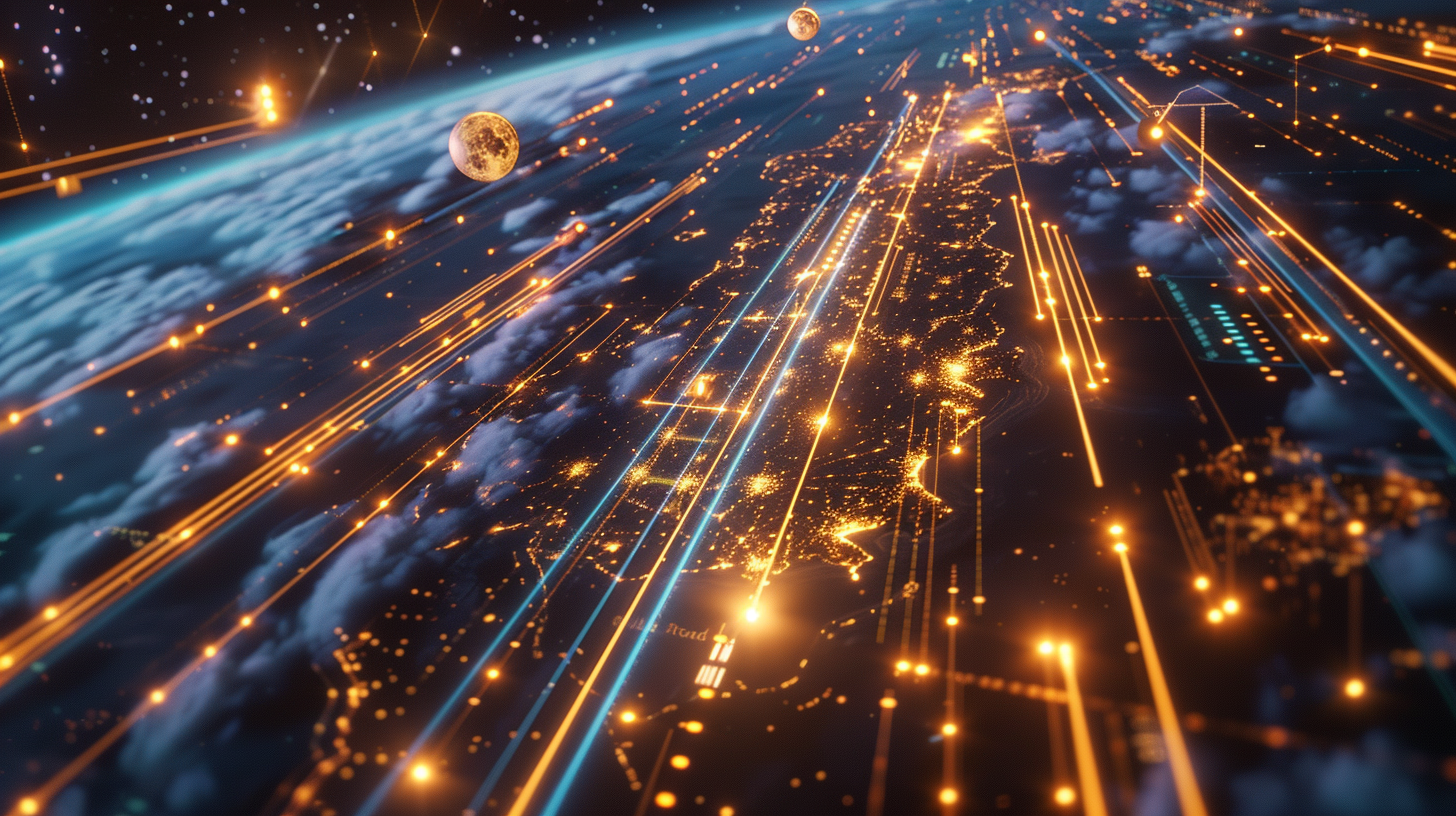
While the market views Starlink primarily as a communications ISP, the release of the Gen 3 (V3) architecture reveals its true purpose: it is a distributed edge-compute platform.
The Hardware Pivot: Unlike previous generations, Gen 3 satellites are equipped with modular "Compute Bays"—shielded housings designed to host custom silicon (ASICs).
The Model: SpaceX is not just reflecting signals; they are processing them. By embedding xAI inference chips directly onto the satellite bus, Starlink V3 becomes a "Sky Server."
The Spec Upgrade:
Power: Expanded solar arrays generate ~20kW+ per unit (vs ~3kW for V1), providing the surplus energy needed to run heavy inference workloads.
Backhaul: The "Optical Space Laser" mesh creates a 100Tbps vacuum-speed internal network, allowing thousands of satellites to act as a single distributed supercomputer.
2. The Use Case: "The Tesla Vision Loop"
Why put AI in space? To solve the bandwidth problem for autonomous agents.
The Musk ecosystem (Tesla, Optimus, xAI) generates petabytes of video data daily. Uploading 4K raw video from millions of robots/cars to Earth servers is bandwidth-prohibitive.
The Edge-Compute Arbitrage:
Input: A Tesla Optimus robot in a remote location sees a complex environment.
Process: Instead of sending raw video to a server in Texas, the data is beamed to a Starlink V3 overhead.
Inference: The onboard xAI model processes the video in orbit (latency <20ms), makes the decision, and deletes the raw video.
Output: Only the low-bandwidth "Action Command" is sent back down to the robot.
Result: A 99% reduction in terrestrial bandwidth costs and zero load on the Earth's power grid.
3. The Unit Economics: "Infinite" Power
The driving economic force is the Energy Arbitrage.
Terrestrial Cost: Powering a H100 GPU cluster on Earth costs ~0.10–0.20 per kWh (industrial rates) + massive cooling water costs.
Orbital Cost: Once the solar array is deployed, the marginal cost of a kWh is $0.00.
Cooling Cost: Space is a 4 Kelvin heat sink. By utilizing radiative cooling surfaces (the "dark side" of the satellite), Starlink V3 rejects heat without pumps, fans, or water.
4. Market Landscape: The "Sovereign" Moat
While Google (Project Suncatcher) and Microsoft (Azure Orbital) are partnering to enter this space, the SpaceX Vertical has an unassailable moat: Launch Cost.
The Competitor's Dilemma: If Google wants to launch a data center, they must pay SpaceX ~$30M to launch it on Starship.
The Incumbent Advantage: SpaceX launches its own infrastructure at marginal cost (fuel + operations), roughly 10x cheaper than any competitor. This allows them to refresh their "Orbital GPUs" every 3–5 years (matching the silicon cycle) while competitors are stuck with amortizing launch costs over 15 years.
Conclusion: The "Standard Oil" of Compute
We are witnessing the formation of the first Off-Planet Industrial Vertical.
SpaceX provides the Power (Solar) and Transport (Starship).
Starlink provides the Distribution (Lasers).
xAI provides the Product (Intelligence).
Investment Verdict:
For the Wealth Office, this confirms our "Infrastructure First" allocation. We are effectively shorting the "Terrestrial Grid" (Utilities) and going long on "Orbital Autonomy."
"The grid is full. The spectrum is crowded. The only empty room is upstairs." — Elon Musk (Earnings Call, Q3 2025)
References & Due Diligence[1]
Starlink Gen 3 Capabilities: Analysis of the V3 bus power and thermal headroom.
FCC Filings: SpaceX Gen 3 Technical NarrativeThe "Tesla Loop": Musk on the integration of xAI, Starlink, and Tesla Vision.
Tesla AI Day 2024 / xAI Integration UpdateGrid Congestion Data: The bottleneck for terrestrial AI.
BloombergNEF: Global Power Constraints for Data Centers 2025Direct to Cell: Processing data at the edge before downlink.
Starlink Direct to Cell Official Page